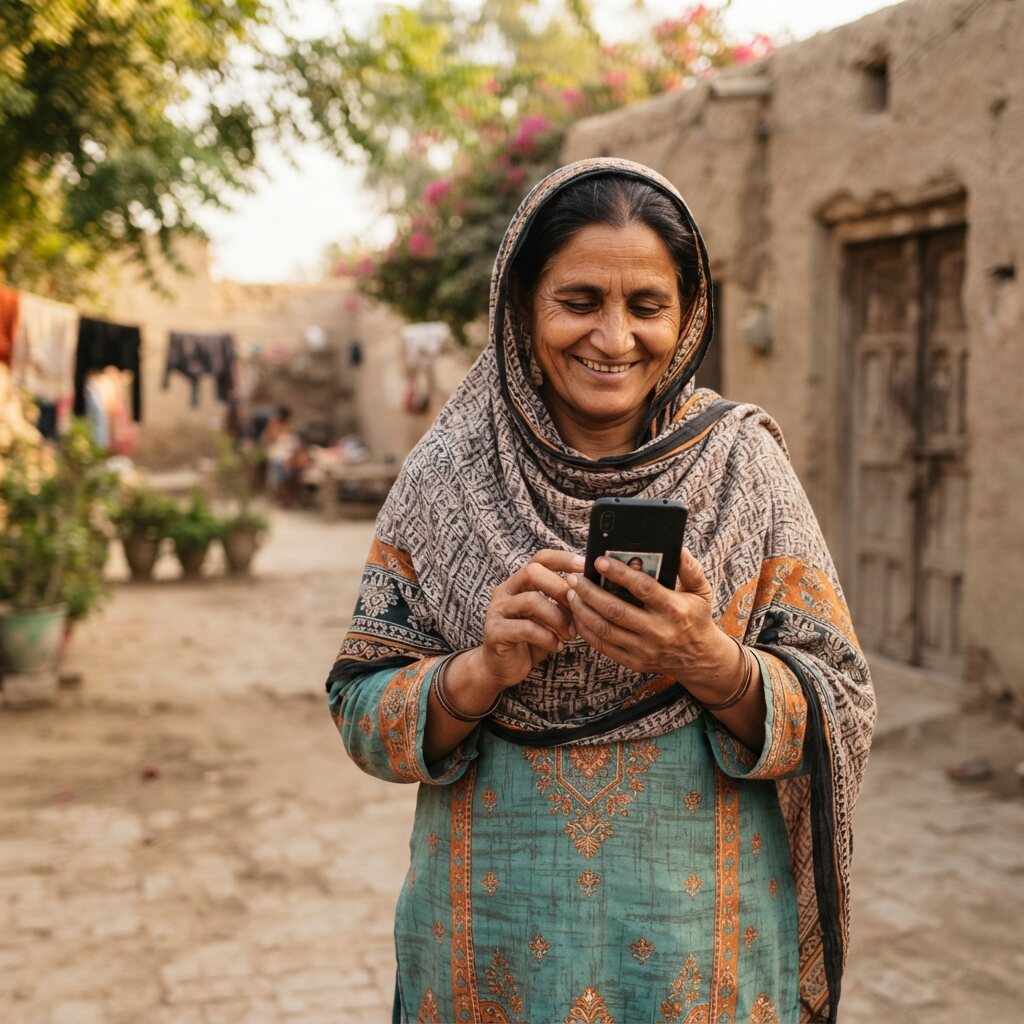
Pakistan's Benazir Income Support Programme (BISP) is shifting payments for over 10 million poor women to CNIC-linked digital wallets in 2026, aiming for 100% digital payments. With 8 million+ free SIMs distributed and an interoperable system allowing withdrawals at any partner agent, it ends long queues and middlemen deductions, a major financial-inclusion and women's-empowerment step.
Sometimes the most important technology stories aren't about the flashiest innovations, they're about technology reaching the people who need it most. Right now, one of the most meaningful digital-finance transformations in Pakistan is happening not in a startup boardroom, but in the hands of millions of the country's poorest women.
Through the Benazir Income Support Programme (BISP), over 10 million women are receiving digital wallets, many becoming account holders for the very first time in their lives. It's a quiet revolution in financial inclusion, and it carries real dignity and empowerment. Here's what's happening, how it works, and why this genuinely matters, both for these women and for Pakistan.
Let's start with the development itself. BISP, Pakistan's flagship social-protection programme supporting more than 10 million deserving families, is shifting its payments from old cash-based methods to a modern digital wallet system in 2026. The government's stated goal is ambitious: to make 100% of BISP payments digitally, a target championed at the highest levels.
Under the new system, beneficiaries, overwhelmingly women, receive their stipends (around Rs 13,500 quarterly) directly into digital wallets linked to their CNIC (national ID) and operated through their mobile phones. To make this possible for women who didn't even have a phone connection, the programme has already distributed more than 8 million free "Benazir SIMs," registered in the women's own names. In short: millions of Pakistan's poorest women are being brought directly into the digital financial system, with the tools to access their own money independently.
To grasp why this matters so much, you need to understand what it's replacing, because the old system genuinely failed the people it served. For years, BISP beneficiaries collected payments through cash-based methods that created real hardship and exploitation.
The problems were serious and well-documented. Women faced long queues at physical payment sites, sometimes waiting hours in difficult conditions. Middlemen and agents frequently took unauthorized "cuts" from payments meant entirely for the beneficiary. There were safety risks in traveling and crowding, and accessibility was poor in rural areas. Perhaps most strikingly, as reporting has highlighted, for around 16 years many of these women were "captured clients" of commercial banks that were unwilling to give them proper bank accounts, even while charging fees on their transactions. In other words, the poorest women were underserved and sometimes exploited by the very system meant to help them. The digital wallet shift is a direct response to these failures, an attempt to restore dignity, control, and fairness.
The new system is thoughtfully designed around the beneficiaries' real needs. Here's how it functions in practice.
Each eligible woman gets a digital wallet linked to her CNIC and mobile number, essentially her own financial account. Payments arrive directly and digitally, eliminating cash camps and the deductions that came with them. Crucially, the system is interoperable: through agreements with 1LINK and partner banks, women can withdraw their funds at any participating bank retailer or agent nationwide, rather than being locked to a single bank or location. This interoperability, backed by the State Bank and supported by institutions like the World Bank, is a big deal, it means a woman can access her money at the most convenient nearby point, not just one designated place. Registration and biometric (thumbprint) verification ensure security and prevent fraud, and registration desks at Union Council offices make the process accessible in both rural and urban areas. It's designed to be safer, faster, and more transparent than anything before it.
Beyond the mechanics, the deeper significance is about human dignity and women's empowerment. This is where the story becomes genuinely moving.
For these women, the change means several powerful things. Direct control over their own money, funds arrive in their wallet, in their name, without a middleman deciding how much they actually receive. Dignity, no more standing in long, exposed queues or being at the mercy of agents. Financial independence, many are becoming genuine account holders for the first time, a foundational step toward financial identity and inclusion. And safety, women don't have to carry cash publicly or travel to distant, crowded sites. As officials have framed it, this isn't merely a technological upgrade; it's a tool for empowerment, giving women greater control, choice, and dignity over their own finances. For women who've long been marginalized, that shift, from dependent recipient to account-holding individual with control, is profound.
This initiative is also part of, and a major contributor to, Pakistan's broader financial-inclusion push, and the scale is significant. Bringing 10 million-plus previously-unbanked women into the digital financial system is one of the largest financial-inclusion efforts imaginable.
The context is striking: Pakistan's digital banking users have reportedly reached around 137 million, over 2 million traders now use digital payments, and initiatives like Raast (the free instant payment system) have laid the rails for this transformation. BISP's digital wallets plug millions of the hardest-to-reach citizens, poor, often rural, often previously unbanked women, directly into this growing digital economy. This matters enormously for Pakistan's goal of formalizing its economy and achieving genuine financial inclusion, because true inclusion isn't measured by banking the already-connected; it's measured by reaching those at the very margins. On that measure, this is a landmark step.
Balanced perspective matters, so let's be honest about the real challenges, because this transition isn't without difficulties. Recognizing them isn't pessimism; it's necessary for the initiative to succeed.
Several genuine hurdles exist. Phone access remains an issue, despite 8 million free SIMs, reaching women who still don't own or can't operate a mobile phone is a real challenge. Digital literacy is another: many beneficiaries have limited experience with apps, SMS, and digital transactions, so education and support are essential (officials acknowledge women need guidance on receiving payments securely). There are risks of new forms of fraud or confusion during the transition, and the need to ensure agents don't find new ways to exploit beneficiaries. And connectivity and infrastructure gaps in remote areas can complicate access. None of these diminish the initiative's value, but they're real, and the program's success depends on addressing them with genuine support, education, and oversight. Financial inclusion isn't complete just by opening a wallet; it requires making sure women can actually use it safely and confidently.
This development carries significance well beyond BISP itself.
For the beneficiaries, it's potentially life-changing, dignity, control, safety, and a first step into financial identity.
For financial inclusion, banking 10 million-plus marginalized women dramatically advances Pakistan's inclusion goals and brings the hardest-to-reach into the formal economy.
For the digital economy, every person brought into digital finance expands the ecosystem, supporting the broader shift toward a documented, formalized, cashless economy.
For women's empowerment, giving women direct financial control is a meaningful step in a country where women's financial inclusion has lagged significantly (with a stark gender gap in account ownership).
For the fintech sector, serving this population at scale drives innovation in accessible, inclusive financial services, useful lessons for reaching underserved users everywhere.
The most important insight here is what genuine financial inclusion actually means. It's easy to celebrate rising digital-payment numbers among the already-connected urban middle class, but the real test of inclusion is whether a system reaches a poor, rural woman who has never had a bank account. By that measure, BISP's digital wallet initiative is one of the most meaningful financial-inclusion efforts Pakistan has undertaken.
The balanced view holds two things together. On one hand, this is a genuinely commendable, potentially transformative step, using technology to restore dignity, cut out exploitation, and empower millions of marginalized women. It deserves real recognition. On the other, its success isn't guaranteed by the technology alone; it depends on execution, on reaching the phone-less, teaching the digitally-inexperienced, preventing new exploitation, and providing ongoing support. The best outcome is that this becomes not just a payment mechanism but a genuine on-ramp to financial identity and independence for millions of women. Achieving that requires sustained commitment beyond the initial rollout. But the direction, technology serving the most vulnerable with dignity, is exactly right, and worth celebrating and supporting.
Expect the rollout to continue scaling toward the 100% digital payment goal, with ongoing efforts to reach remaining beneficiaries, including the phone-less and those needing digital-literacy support. Watch for how well the interoperability system works in practice, whether it genuinely reduces friction and exploitation, and whether beneficiaries grow comfortable and confident using their wallets.
If successful, this model could inform other social-protection and inclusion efforts, in Pakistan and beyond, demonstrating how to bank the hardest-to-reach with dignity. The broader trajectory, combined with Raast, digital banking growth, and inclusion initiatives, points toward a more financially-inclusive Pakistan, with this BISP effort reaching precisely those who need inclusion most.
The shift to digital wallets for 10 million-plus of Pakistan's poorest women is one of the country's most meaningful technology stories, precisely because of who it serves. By giving marginalized women CNIC-linked wallets, free SIMs, and interoperable access to their own money, it ends long queues and middlemen deductions, and offers something more valuable than convenience: dignity, control, and financial identity, often for the first time. It's a landmark financial-inclusion and women's-empowerment step, backed by real infrastructure like Raast and interoperability. Honest challenges remain, phone access, digital literacy, ongoing support, and success depends on addressing them. But the vision, technology reaching the most vulnerable with dignity, is exactly what inclusive progress should look like. When 10 million women gain control over their own money for the first time, that's not just a payment upgrade. It's a quiet revolution worth celebrating, and supporting all the way through.
This article is for general informational purposes only and reflects announcements and reports available in 2026. Program details, timelines, and processes may change, beneficiaries should verify current information and procedures through official BISP channels (such as the 8171 service) and beware of scams. This is not financial or official advice.
Pakistan's Benazir Income Support Programme (BISP), the country's flagship social-protection programme supporting 10+ million deserving families, is shifting payments from cash-based methods to CNIC-linked digital wallets in 2026, targeting 100% digital payments (a Prime Minister-championed goal). Over 10 million beneficiaries, overwhelmingly women, receive stipends (around Rs 13,500 quarterly) directly into wallets operated via mobile phones. To reach women without phone connections, 8+ million free "Benazir SIMs" registered in the women's own names have been distributed.
Why it matters: the old cash system failed beneficiaries, long queues, unauthorized deductions by middlemen/agents, safety risks, and poor rural access. Notably, for ~16 years many of these women were "captured clients" of commercial banks unwilling to give them proper accounts while still charging fees. The digital shift restores dignity, control, and fairness, with many women becoming genuine account holders for the first time.
How it works: each woman gets a CNIC- and mobile-linked wallet; payments arrive digitally (no cash camps/deductions); and an interoperable system (via 1LINK and partner banks, backed by SBP and supported by the World Bank) lets women withdraw at any participating bank retailer/agent nationwide, not just one bank. Biometric (thumbprint) verification ensures security; Union Council registration desks aid access.
Significance: direct control over their money, dignity (no queues/middlemen), financial independence (first-time account holders), and safety. It's a landmark financial-inclusion and women's-empowerment step, plugging millions of previously-unbanked women into a digital economy that now has ~137 million digital banking users, built on rails like Raast.
Honest challenges: reaching phone-less women, limited digital literacy (needing education/support), transition fraud risks, preventing new agent exploitation, and rural connectivity gaps. Success depends o