Pakistan is gradually replacing machine-readable passports with a fully digital e-passport system. Citizens will be able to apply online through the NADRA Pak ID app, upload documents, pay fees digitally, and receive passports at home. Pakistan first launched e-passports in 2022 and upgraded them in 2025 with laser engraving and digital security certificates.
Anyone who has stood in a long, hot queue at a passport office in Pakistan will welcome this news. The government has announced plans to gradually replace traditional passports with a fully digital e-passport system, one that lets citizens apply online, pay fees digitally, and even receive their passport at home.
This is a meaningful step in Pakistan's digital transformation, promising to make one of the most common government tasks far less painful. Here is exactly what is changing, how the new system works, what the e-passport offers, and an honest look at what is available right now versus what is still coming.
The move is about modernizing a system millions of Pakistanis rely on. Director General of Immigration and Passports, Muhammad Abdul Khaliq, said the initiative aims to modernize passport services and simplify the application process through digital technology.
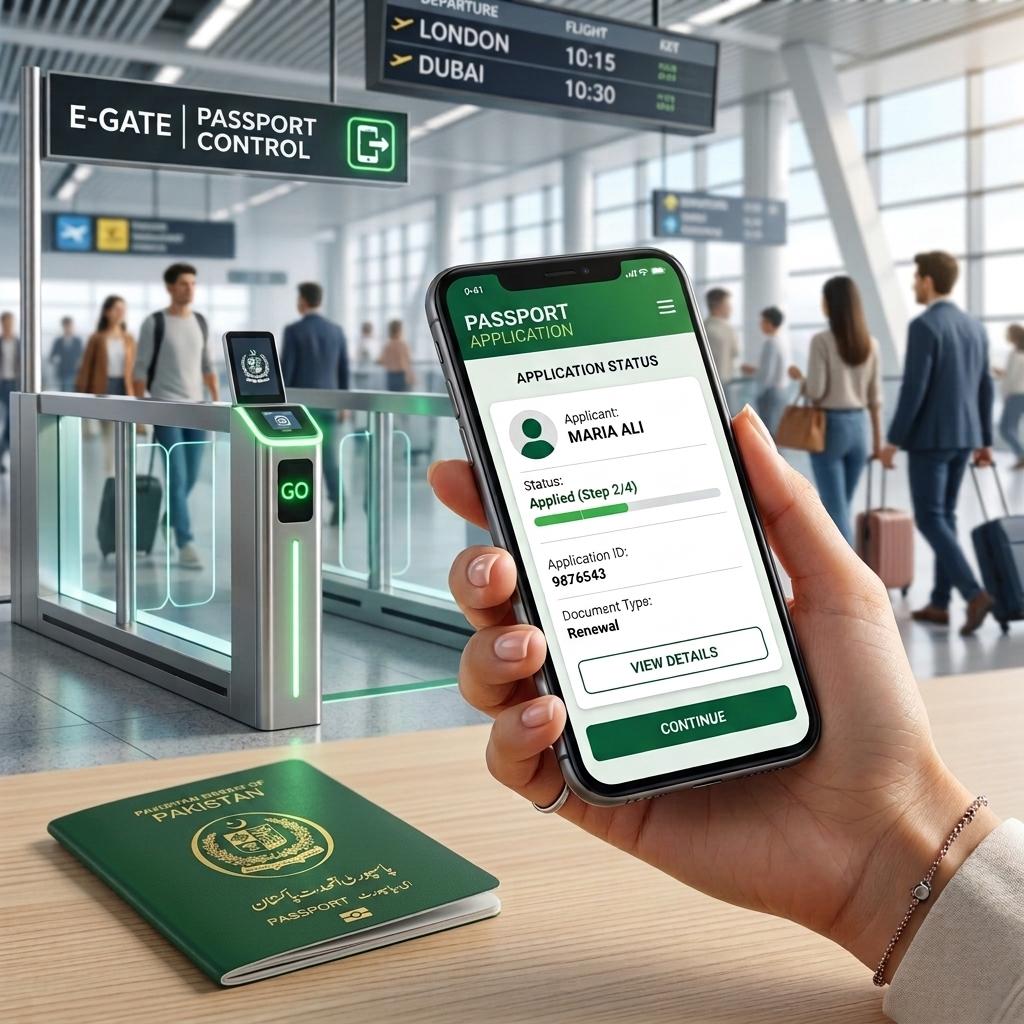
The vision is a fully digital journey. Under the new system, applicants will be able to submit passport applications through a mobile app integrated with NADRA's Pak ID platform, upload photographs and supporting documents, pay fees online, and receive their passports at their doorstep. In short, the goal is to let you get a passport without ever visiting an office.
This builds on real progress already made. Pakistan introduced its first e-passport in 2022, then upgraded the system in 2025 to meet international standards.
An e-passport, or electronic passport, looks like a normal passport but contains a small embedded chip storing your data securely. This makes it far harder to forge and faster to verify at borders.
Pakistan's upgraded version is built to modern security standards. The e-passports feature laser engraving technology and digital security certificates, making them more secure against forgery. The embedded chip and digital certificates mean immigration officers can quickly and reliably confirm the document is genuine.
This is a real upgrade over the older machine-readable passports, offering better security and smoother international travel.
One of the most practical benefits is coming through international recognition. The government is completing Pakistan's registration with the International Civil Aviation Organization (ICAO), the UN body that sets global standards for travel documents.
This step unlocks a real convenience. Once the process is complete, Pakistani e-passports will gain broader compatibility with e-gates worldwide, allowing faster immigration clearance. E-gates are the automated machines at airports that let travelers scan their passport and pass through without waiting for a manual check. For Pakistani travelers, this could mean shorter queues at airports abroad.
The heart of the system is the NADRA Pak ID mobile app, which many Pakistanis already use for identity documents. The app is designed to handle the whole process from your phone.
Based on how the Pak ID system works, the digital passport process is meant to let you create an account and log in with biometric verification, capture an ICAO-standard photo using your phone camera, scan your fingerprints through the app, upload required documents by photographing or selecting files, sign digitally on your touchscreen, and pay fees through digital channels. Authorities have also said they will accept digital documents and conduct online interviews where required, and fees can be paid through mobile banking apps and digital wallets.
The aim is a smooth, end-to-end digital experience that removes the need for physical visits in most cases.
Here is where honesty matters, because the full vision is rolling out gradually, not all at once. It is important to know the current state so you are not caught out.
As of now, for applicants inside Pakistan, the online service has mainly been available for passport renewals, not brand-new passports. First-time adult applicants may still need to visit a passport office for parts of the process. Home delivery, long available for overseas Pakistanis, is being expanded for inland applicants, but in some cases passports have been delivered to a selected passport office rather than the doorstep during the transition.
The government's clear direction is toward full online application and home delivery for everyone, but it is being introduced in phases. Always check the current options on the official portal before applying.
The government has been sensible about not leaving anyone behind. Not everyone is comfortable with apps or has a smooth biometric experience, and the system accounts for this.
Officials confirmed that applicants who face biometric verification or online submission issues will still be able to complete the process at passport offices or NADRA centers. This hybrid approach means the digital system is an added convenience, not a barrier. Those who prefer or need in-person help can still get it.
This is about much more than passports. It is part of a bigger digital-governance shift.
For citizens, it means saved time, less standing in queues, reduced travel to offices, and more transparency in a process that has often been frustrating. For overseas Pakistanis especially, applying from abroad is a huge convenience.
For the digital economy, it normalizes digital payments and app-based government services, building public trust and habits that support the broader Digital Pakistan vision. It connects to NADRA's wider push, including digital ID cards and a unified identity platform.
For Pakistan's global standing, ICAO-compliant e-passports and e-gate compatibility signal a modern, internationally aligned system, which matters for a country whose citizens travel widely for work and study.
The honest challenge is execution: reliable app performance, smooth biometrics, secure data handling, and dependable delivery. Digital government services succeed only when they actually work smoothly for ordinary people, so consistent delivery will be the real test.
This e-passport push fits a clear pattern. Pakistan has been steadily digitizing identity and government services, from NADRA's Pak ID app for CNICs and NICOPs to digital ID cards and online civil registration. The passport system joining this ecosystem is a logical, welcome step.
The key to success, as with all such initiatives, is trust and reliability. When services work smoothly and data is handled securely, people embrace them quickly, as the strong public response to NADRA's digital ID services has shown. The passport system has the same potential, if it delivers on its promises consistently.
Expect the online passport system to expand steadily, eventually covering new applications and full home delivery for inland applicants, not just renewals and overseas users. As ICAO registration completes and e-gate compatibility grows, international travel should get smoother for Pakistanis.
The direction is clearly toward a future where getting or renewing a passport is as simple as a few taps on your phone. The pace of that future depends on smooth, reliable rollout.
Pakistan's move to a fully digital e-passport system is genuinely good news for citizens tired of queues and paperwork. The promise of applying online, paying digitally, and receiving your passport at home would make a real difference in daily life. While the full system is still rolling out in phases and currently favors renewals and overseas applicants, the direction is clear and encouraging. Combined with stronger security and global e-gate compatibility, the e-passport marks a solid step forward for Digital Pakistan. For now, check the official portal for what applies to your case, and look forward to a simpler passport experience ahead.
This article is for general informational purposes only and reflects announcements and processes available as of July 2026. Passport rules, fees, availability, and delivery options change and vary by applicant category; always verify current details on the official DGIP (dgip.gov.pk) and NADRA Pak ID platforms before applying.
Pakistan has announced plans to gradually replace traditional machine-readable passports (MRPs) with a fully digital e-passport system. Director General of Immigration and Passports Muhammad Abdul Khaliq (speaking on ARY News) said the system will let citizens apply online, upload photos and documents, pay fees digitally, and receive passports at their doorstep, via a mobile app integrated with NADRA's Pak ID platform.
Background: Pakistan introduced its first e-passport in 2022 and upgraded it in 2025 to meet international standards. The upgraded e-passports feature laser engraving technology and digital security certificates, making them more forgery-resistant. The government is also completing Pakistan's registration with the International Civil Aviation Organization (ICAO); once done, Pakistani e-passports will gain broader compatibility with e-gates worldwide for faster immigration clearance.
Process (via the NADRA Pak ID app): account creation with biometric verification, ICAO-standard photo capture through the phone camera, fingerprint scanning, document upload, digital signature, and online fee payment through mobile banking apps and digital wallets. Authorities will also accept digital documents and conduct online interviews where required.
Important current limits (phased rollout): for inland applicants, online service has mainly covered passport renewals, not new passports; first-time adult applicants may still need an office visit; and inland home delivery is being expanded (some passports delivered to a selected passport office during transition). Home delivery has long been available for overseas Pakistanis. Applicants who face biometric or online submission issues can still complete the process at passport offices or NADRA centers.
Always verify current options, fees, and delivery at the official DGIP and NADRA Pak ID platforms before applying. This is informational, not official application guidance; rules change.