Dr. Samar Mubarakmand is a renowned Pakistani nuclear physicist, born in 1942, known for his research in gamma spectroscopy and building the Charged Particle Accelerator at PINSTECH. Oxford-educated, he was a pioneer of fibre-optic technology in Pakistan, founding chairman of NESCOM, and today leads mineral exploration as chairman of the Punjab Mineral Company.
Most people can name a famous cricketer or politician. But how many can name the scientists who quietly shaped the nation's destiny? In Pakistan's scientific community, one name commands deep respect: Dr. Samar Mubarakmand. A brilliant physicist who spent his life in laboratories and research institutions, he is often called an "unsung hero", and by all accounts, he preferred it that way.
His story is not about seeking fame. It is about a lifetime of dedication, scientific excellence, and service to his country, work that continues even today, well into his 80s. This is the story of a quiet genius, the kind of builder Pakistan does not celebrate nearly enough.
Dr. Samar Mubarakmand is a distinguished Pakistani nuclear physicist. He is known for his research in gamma spectroscopy and the development of the Charged Particle Accelerator at the Pakistan Institute of Nuclear Science and Technology (PINSTECH).
His journey began with academic brilliance. Born on 17 September 1942 in Rawalpindi, he showed exceptional ability from a young age. He earned his Master's in Physics from Government College, University of the Punjab, Lahore in 1962, graduating with the Academic Roll of Honour, before winning a place at one of the world's great universities.
There, he specialized in the field that would define his career. He completed his M.Phil in Experimental Nuclear Physics from Oxford University in the United Kingdom in 1966, returning home equipped with world-class training and a determination to serve Pakistan with his knowledge.
On returning to Pakistan, Mubarakmand devoted himself to research at the highest level. He joined the country's leading scientific institutions and did fundamental work in areas like neutron spectroscopy, building a strong reputation among senior scientists for his rigor and skill.
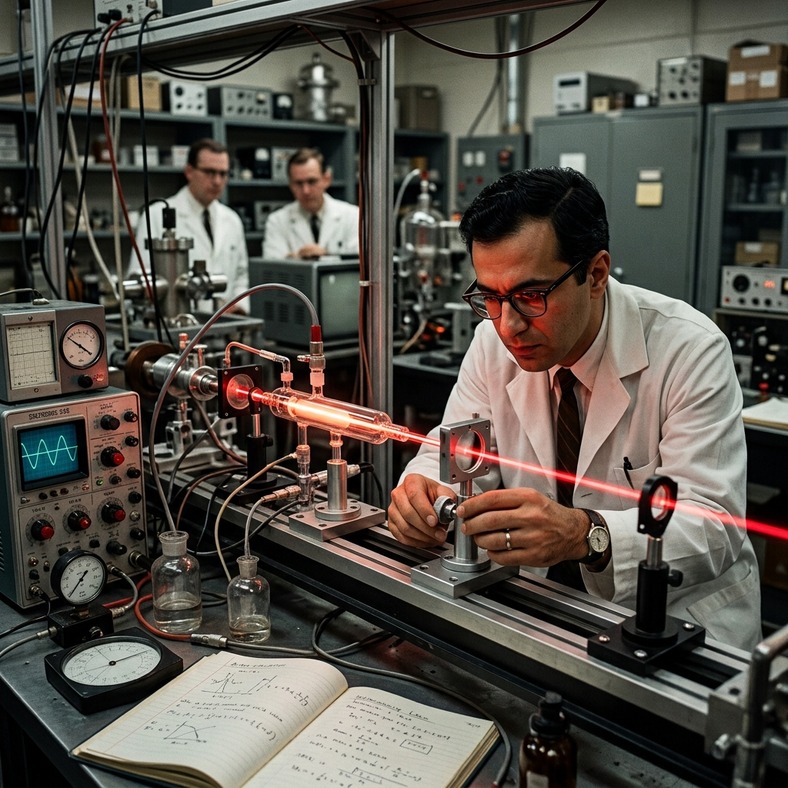
One of his notable technical achievements came in 1978, when he led the construction of a linear particle accelerator at PINSTECH, an advanced piece of scientific equipment that few countries could build at the time. This kind of work placed Pakistan on the scientific map and trained a generation of researchers.
His scientific range extended beyond pure physics. Remarkably for a tech-focused audience, he is recognized as a pioneer of fibre-optic technology in Pakistan, helping introduce systems for interference-free data transmission, a foundational technology for modern communications. This detail alone shows how broad and forward-looking his contributions were.
Dr. Mubarakmand's name became internationally known in May 1998, during one of the most significant moments in Pakistan's history. He headed the team of academic scientists involved in the country's landmark tests in the Chagai region of Balochistan, an event that changed Pakistan's strategic standing forever.
His own recollection of that moment reveals the soul of a scientist, not a bureaucrat. He described the intense anticipation, watching and waiting, his heart seeming to pause when nothing appeared to happen at first, and then the overwhelming relief and emotion when the effort succeeded. It was the culmination of years of dedicated scientific work by a large national team.
Whatever one's views on the wider subject, the moment represented an extraordinary feat of scientific and organizational capability by Pakistani scientists working under immense pressure, and Mubarakmand was at the center of it, calm and focused.
What truly sets Dr. Mubarakmand apart is that he was a builder of lasting institutions, not just a participant in single events. His most enduring legacy may be the scientific infrastructure he helped create.
He served as the founding chairman of the National Engineering and Scientific Commission (NESCOM). Under his leadership, this body established Centres of Excellence across a wide range of advanced fields, including computational science and medicine, control and instrumentation, fluid dynamics and engineering design, hydro technologies, wireless communication, electronics, and composite materials.
He also championed knowledge-sharing. He pioneered international conferences on materials, fluid dynamics, and aerospace technology, attended by technologists from the USA, Europe, and across Asia, held for a decade and inaugurated by Pakistan's top leadership. This was nation-building through science, creating institutions and platforms that would outlast any individual.
Perhaps the most inspiring part of Dr. Mubarakmand's story is that he never retired into the background. Well into his 80s, he continues to serve Pakistan, now focused on the nation's energy and mineral resources.
He was appointed to help with the Thar coalfield project, one of Pakistan's most important energy resources, and has served as chairman of the Board of Governors for the Underground Gasification Project at the Thar coalfields. Today, he serves as Chairman of the Board of Directors of the Punjab Mineral Company, voluntarily leading mineral exploration efforts in the Chiniot district.
Think about that: a man who could easily rest on decades of achievement instead chooses to keep working, now helping Pakistan explore and develop its own natural resources. It reflects a rare, lifelong commitment to national service.
Dr. Mubarakmand's life carries powerful lessons, especially for young Pakistanis in science and technology.
For students and scientists, he is proof that world-class scientific achievement is possible from Pakistan. His path, from a Lahore college to Oxford to building advanced technology at home, is a roadmap of excellence and dedication.
For the tech community, his pioneering work in areas like fibre optics and advanced instrumentation shows the value of deep technical expertise and building capability locally, exactly the spirit Pakistan needs as it pursues AI, electronics, and modern industries.
For the nation, his career embodies the idea that real progress comes from builders, people who create institutions, train others, and solve hard problems quietly over decades. His continued work in energy and minerals shows science serving national development directly.
Dr. Mubarakmand represents a type of hero Pakistan does not celebrate enough: the quiet builder. Not the loud personality seeking headlines, but the dedicated expert working in the lab, the institution, and the field, year after year.
His example raises an important question for Pakistan today: how does the country nurture, retain, and honor its brilliant scientists and engineers? As Pakistan pushes into AI, technology, and a knowledge economy, it needs many more people like him, and it needs to create the conditions where such talent chooses to build at home. Celebrating figures like Mubarakmand is part of inspiring the next generation to follow that path.
As Pakistan invests in science, technology, and a knowledge-based future, the legacy of scientists like Dr. Mubarakmand becomes ever more relevant. His life is a template: deep education, world-class skill, institution-building, and relentless service.
The hope is that Pakistan produces many more such figures, in AI, energy, medicine, engineering, and beyond, and that it learns to celebrate and support them. The country's future depends on exactly the kind of quiet, brilliant dedication he has shown for over half a century.
Dr. Samar Mubarakmand's life is a testament to what Pakistani talent, dedication, and service can achieve. A brilliant physicist, a builder of institutions, a pioneer of technology, and even now, in his 80s, a servant of the nation exploring its earth for resources, he never stopped giving. He sought no spotlight, yet his impact is woven into the fabric of the nation. This is the Pakistan worth talking about more: the scientists, the builders, the quiet giants. Dr. Mubarakmand deserves to be known, honored, and, above all, emulated. His life whispers a powerful message to every young Pakistani: build, serve, and let your work speak for itself.
This article is a tribute based on public records about Dr. Samar Mubarakmand's scientific career and public service, intended to honor his contributions to Pakistani science and nation-building.
Dr. Samar Mubarakmand (born 17 September 1942, Rawalpindi) is one of Pakistan's most distinguished nuclear physicists, known for research in gamma spectroscopy and building the Charged Particle Accelerator at the Pakistan Institute of Nuclear Science and Technology (PINSTECH). He earned his Master's in Physics from Government College, University of the Punjab, Lahore (1962, Academic Roll of Honour) and an M.Phil in Experimental Nuclear Physics from Oxford University, UK (1966).
Over his career he did fundamental work in neutron spectroscopy, built a linear particle accelerator at PINSTECH (1978), and was a pioneer of fibre-optic technology in Pakistan for interference-free data transmission. In May 1998, he headed the team of academic scientists involved in Pakistan's landmark tests in Chagai, Balochistan, a defining moment in the nation's history that showcased the scientific and organizational capability of Pakistani scientists.
His enduring legacy includes institution-building. As founding chairman of the National Engineering and Scientific Commission (NESCOM), he established Centres of Excellence across fields including computational science and medicine, control and instrumentation, fluid dynamics and engineering design, hydro technologies, wireless communication, electronics, and composite materials. He also pioneered international scientific conferences attended by technologists from the USA, Europe, and Asia.
Now in his 80s, he continues serving Pakistan through energy and mineral development, having worked on the Thar coalfield and underground gasification projects, and currently serving as Chairman of the Punjab Mineral Company, voluntarily leading mineral exploration in the Chiniot district. He holds top national honours (Nishan-e-Imtiaz, Hilal-e-Imtiaz, Sitara-e-Imtiaz).
His life exemplifies the "quiet builder", a scientist of world-class skill and lifelong national service who never sought the spotlight. This is a tribute based on public records.